
Second cup of coffee, and nothing is nagging at me. No mental countdown to the hallway, no quiet calculation about how many minutes I've got before the urge shows up — just coffee, cooling in the mug the way it's supposed to. That's the first time in months a second cup has felt uneventful, and the only real change on my end has been swapping the usual snack drawer for a bowl of vitamin C foods on the counter, chosen specifically for whatever they might be doing for prostate health I'd been ignoring for too long.
Quick housekeeping before the food talk: this site runs on affiliate links, and if you end up buying something like Protoflow through one of them, I get a small commission at no extra cost to you. None of that changes what I'm about to say, and none of it makes me a doctor — I'm still just a guy who logs his own bathroom trips like they're server uptime. What I do want to push back on is something repeated across every prostate forum and product page out there: the idea that if a little vitamin C works as natural support, a lot must work even better. That's backwards, and treating it like a dial you can just crank up can cause its own problems.
Cutting things out was my first move, actually, and it didn't work. I quit coffee cold turkey for three weeks on the theory that caffeine alone was driving the night trips — mornings were brutal, I was insufferable enough that Gary called me out on it during a phone call, and the 3 AM wake-ups kept happening anyway. That's usually a sign you're troubleshooting the wrong layer of the stack, and it's what pushed me toward looking at what I was actually eating instead of just what I was cutting.
The 'More Vitamin C Is Always Better' Myth
That idea probably stems from the general RDA math: the standard recommended intake for Vitamin C sits around 90 mg a day, most guys clear that without trying, and somewhere along the way "clearing the minimum" turned into "so more must be even better for this specific gland." There's a real reason vitamin C kept showing up in my reading whenever I searched anything connected to prostatic fluid — it's tied to that tissue in ways I won't pretend to fully understand, and that half-explanation is exactly the kind of thing that gets stretched into "take ten times the RDA" advice by whoever's selling the powder.
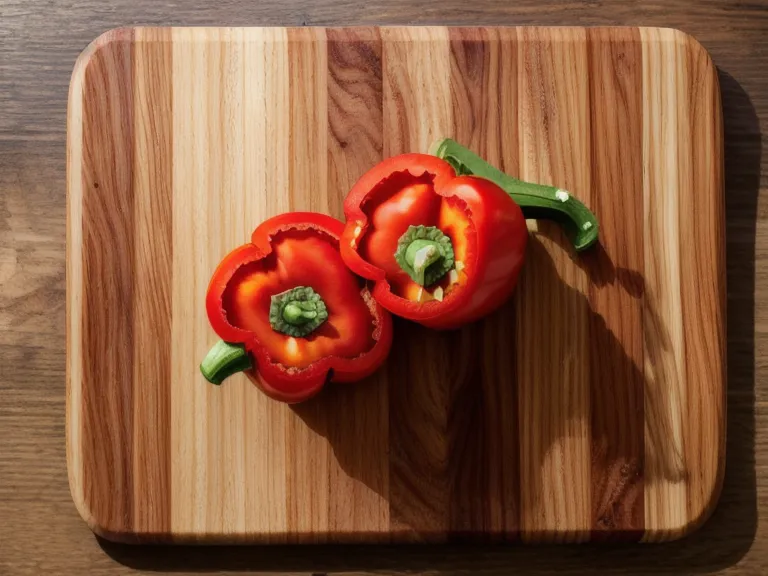
What the Vitamin C Food Data Actually Shows
Red bell peppers turned out to be the actual MVP once I started paying attention to real numbers instead of marketing copy. A single medium one carries roughly 152 mg of Vitamin C, nearly double that RDA in one vegetable, and slicing them up became a small part of my men's nutrition routine while I worked through client deliverables at my desk. Guavas run a close second when I can find them — a single one can carry over 120 mg — and two small kiwis land around 130 mg, plus enough fiber to help with the digestion side of things most guys start noticing more the older they get. A cup of strawberries adds about 90 mg on its own, easy enough to toss into whatever I'm blending in the morning, and citrus still earns its reputation, though tangerines beat oranges for me personally: there's a specific, sharp spray of tangerine oil that hits your knuckles when you're peeling one at an odd hour, and it's a strangely grounding thing to notice in the middle of an otherwise frustrating night.
Gary — a friend from my old IT days who has an opinion about basically everything I do — refuses to track so much as his own step count, but even he can't argue with a vegetable that beats a fancy "superfood" powder without the chalky aftertaste. I sank real money into a few of those powders before admitting a bell pepper was doing the same job better, which is its own special kind of user error.
Focusing on one nutrient without checking the others felt like tuning a single query while the whole database groaned under load, which is why I went back and cross-referenced everything against The Role of Selenium in Supporting Long Term Prostate Health before drawing any real conclusions. Sleep is usually the bigger complaint anyway — the trips themselves are almost secondary to how wrecked you feel from being up at all hours, which is its own topic I've gone deep on elsewhere. I keep a running log of nightly trips more out of habit than any real analytical need at this point, and there's a separate question entirely about when you stop drinking anything before bed, which is its own rabbit hole I won't get into here.

Why Megadosing Vitamin C Doesn't Help More
Kidney stones are where the "more is better" myth actually falls apart, and it's the part of this topic nobody wants on a product label. Extremely high intakes of Vitamin C — even from food, not just pills — have been linked to a higher risk of oxalate-related kidney stones in men whose kidneys aren't filtering the way they used to, and I'm deliberately not going to pretend I understand the full mechanism behind that, because I don't, and neither does whoever's selling you a jar of ascorbic acid crystals. If you've got any personal or family history of kidney stones or reduced kidney function, that's a conversation for an actual doctor, not a spreadsheet — full stop.
None of that means Vitamin C is dangerous for the average guy reading this. It means the "more is infinitely better" framing is lazy, and a diet full of actual bell peppers and citrus is a completely different animal than dumping a mega-dose supplement on top of an already-supplemented routine. My own rule, for whatever it's worth, is to get most of my intake from food and let supplements fill in gaps rather than stack multiple high-dose sources on top of each other — less a health philosophy and more a general aversion to redundant systems, the same instinct that made me hate running two backup services that do the exact same job.
Stack the Food, Don't Replace the Supplement
Protoflow is still the supplement I default to, mostly because the ingredient list is straightforward — saw palmetto and beta-sitosterol show up in that one and in most of the serious competitors, and I've got a separate piece where I actually compare how those two behave against each other if that's the rabbit hole you want. Layering real food on top of a supplement like that seems to matter more than either one alone, at least based on what I've tracked in my own numbers, though I'll be the first to admit a guy counting his own bathroom trips isn't exactly running a controlled trial. You can read more of my thinking on the whole category in my honest take on prostate supplements, including why I've stuck with the same one as long as I have.
Hector Mancini — a reader from South Florida who's emailed me more than once with his own tracking notes — is convinced anything in liquid form is basically a marketing trick, and he won't touch a dropper bottle no matter what's floating in it. That's part of why I mention ProstaVive at all: it's a liquid formula a lot of guys like, gravity score sitting around 111 last I checked, which tells you it's moving product, but I lean toward the capsule format myself for the same reason Hector does — less guessing about dosage per squirt. Building a "stack" that actually works, whether it's food plus capsules or food plus drops, comes down to picking one lane and tracking it consistently instead of switching formulas every time a new one lands in your inbox.

The Rule I Actually Follow Now
So here's the actual rule, stripped of the myth: eat real vitamin C sources most days as your baseline — peppers, citrus, whatever's easy to grab — treat something like Protoflow as a backup rather than the whole plan, and never assume that doubling or tripling either one doubles the benefit, because past a certain point you're just handing your kidneys a harder job for no extra prostate benefit. My home office in our Carrollwood-area house makes this easy to keep straight: one monitor for actual work, one usually parked on whatever tracking sheet I'm updating that week, a whiteboard on the wall with more crossed-out start dates than I'd like to admit, and a bathroom about a dozen steps down the hall that I've apparently spent two years quietly measuring my life against. If you're still fighting frequent trips after cleaning up the food side, bladder training is worth a look as a next layer, not a replacement for any of this.
Kitchen counters are a lot more honest than supplement marketing — a bowl of peppers doesn't need a sales page to prove it works. My wife still thinks weighing strawberries on a kitchen scale is a bit much, but she's stopped arguing with the results, and that's about as much validation as any of us IT guys ever really need.