
A capsule and a chewable can carry the exact same active ingredient and still rack up two completely different track records — one shaped by what's in the bottle, the other by whether you actually keep opening it. That tension is the whole story behind FlowForce Max, the chewable entry in the world of prostate supplements that I've spent years logging, and it's worth settling the headline question upfront: a gummy format doesn't automatically mean weaker BPH support, but in this particular case, the numbers on my end don't fully back up the convenience.
Quick housekeeping before the breakdown: I'm not a doctor, a urologist, or anyone with formal medical training — just a guy with a spreadsheet and an unusually well-documented bladder. This site runs on affiliate links, so if you buy through one, I earn a commission at no extra cost to you. I only recommend something like FlowForce Max or Protoflow after running it through my own multi-month tracking, and if your own symptoms are getting worse, a real professional is the next call, not this post.
The Compliance Math Behind Every Chewable
Here's the pattern I've watched across a dozen-plus supplements: the ingredient that wins isn't always the one with the highest milligram count, it's the one you actually take every single day without fail. Chewables are the third format on the market, after capsules and liquids, and they change the compliance math more than the absorption math. I never once forgot to take FlowForce Max, not a single missed morning the whole cycle, which is more than I can say for capsules that occasionally end up lost in a random kitchen drawer (a junk-drawer failure mode every household seems to have, apparently).
None of that matters, though, without a number to compare it against. Years ago I tried a discount saw palmetto bottle from Walgreens on a whim, no tracking involved, and to this day I have no idea whether it did anything at all, which is exactly the blind spot that got me logging every bathroom trip in a spreadsheet in the first place (probably more spreadsheet than any grown man needs for his own bladder, but here we are). That kind of baseline count, logged before you start anything new, is really the whole game — a supplement without a "before" number attached to it is just a guess with packaging. A friend of mine, who plays pickleball at Rowlett Park most Sunday mornings, switched to a chewable for a simpler reason than mine: he kept forgetting the second capsule at lunch, and a gummy sitting next to his coffee mug was harder to skip. I mapped out the baseline options already in Best Vitamins for Prostate Health and Reducing Nightly Bathroom Trips, and the chewable question picks up right where that one left off.
What a Gummy Gives Up to Taste Good
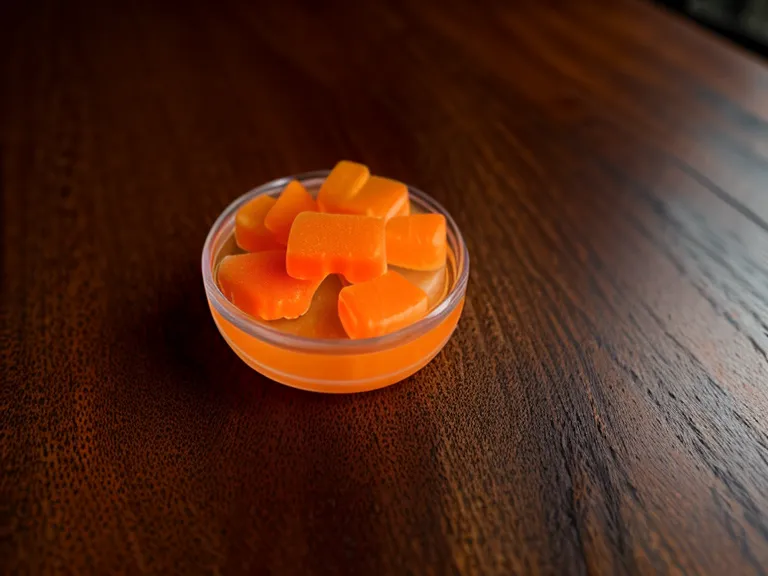
Texture and taste are where chewables win outright, and FlowForce Max's version is genuinely pleasant — a light orange-candy flavor with none of the bitter aftertaste that makes capsule mornings feel like a chore. It does leave a faint chalky film on the back molars for a while after, a minor annoyance but worth flagging if you're sensitive to that kind of thing. The tradeoff is what has to go into the mix to make a supplement taste like candy instead of medicine: binders, flavoring, and sugar all take up physical space in a chewable that a capsule doesn't need, which leaves less room for the active ingredient actually doing the work. I picked up my current bottle from a pharmacy counter near Hyde Park Village, and reading that label next to the capsule alternatives on the same shelf made the tradeoff obvious in a way no chart ever had.
Reading the FlowForce Max Label Like a Spec Sheet
Once you know to look, the label reads like a spec sheet rather than a wellness pitch. FlowForce Max carries a noticeably lower milligram count of beta-sitosterol than the capsule-based options built for heavier Benign Prostatic Hyperplasia support, and that gap is the direct consequence of the filler problem above, not a separate issue. Saw palmetto and beta-sitosterol aren't interchangeable levers either, and which one carries more weight in a given formula is a comparison I've run in full elsewhere, so I won't repeat it here. Ingredient stacking is its own rabbit hole too — how one product's saw palmetto dose sits next to another's sitosterol content is a question I've mapped out separately rather than cramming it into a single review.

Who Should Actually Reach for a Chewable?
Here's the decision rule I'd actually give a friend asking: first, if your nightly count sits at one or two trips and the only real obstacle is hating pills, a chewable solves the actual problem, because compliance is the whole battle at that stage. Second, if you're already up three or four times a night, chase potency before format — a pleasant gummy taken reliably every day still won't out-perform a properly dosed capsule taken just as reliably. Format is one lever among several, and it's rarely the loudest one: sleep disruption, not the raw trip count, usually tells you something is actually changing, hydration timing before bed matters just as much as anything you swallow, and bladder training and pelvic floor work are their own disciplines entirely, tracked on separate sheets rather than folded into a supplement review.
None of this is theoretical for me. In seven years of logging this stuff, format has consistently ranked as one of maybe five variables that actually move the needle, right alongside the hydration and sleep pieces above. A modest improvement still shows up in real moments — these days a two-hour vendor call goes by without the chair-shifting and without mentally mapping out the nearest bathroom, something that used to run in the background of every meeting. That's what a roughly 25 percent drop in trips actually feels like day to day, for what it's worth, rather than the tidy number it looks like on a spreadsheet.
Where the Convenience Costs You
Cost tells a similar story once you divide it by results instead of just eyeballing the sticker price. FlowForce Max sits in the same general price bracket as Protoflow, but the yield per dose feels lower once you factor in the potency gap above — you're not paying less for less, you're paying about the same for less, which is a worse trade than it first appears (my IT brain wants to call this a bad price-to-performance ratio, so there it is). My own side-by-side testing in Protoflow vs FlowForce Max showed a sharper, faster decline in urgency with the capsule, and that gap held up over the whole comparison, not just an early stretch. FlowForce Max still leaves a dull, familiar pressure low in the abdomen a short while after I think I'm done, the kind of background process that doesn't fully quit even on a good day.
How FlowForce Max Stacks Up Against the Rest of the Prostate Supplement Field
On my own tracking sheet, ranked side by side, the current field breaks down like this. Your results will vary — this is personal testing, not a clinical trial, so loop in your own doctor before starting anything new.
1. Protoflow: Still my top pick, mainly on ingredient transparency and a genuinely high dose of saw palmetto — the enterprise-grade option in my book. It's a capsule, but the tracked data backs it up. Check the current Protoflow availability here.
2. ProstaVive: A solid liquid option that absorbs quickly, though the taste is rough, closer to swamp water than anything pleasant, so I mix it with juice. View ProstaVive details here.
3. FlowForce Max: The right call if you genuinely cannot get a capsule down. It's the lightweight version of prostate support — pleasant, easy to stick with, underpowered once your bladder is already high-traffic. Try FlowForce Max if you hate pills.
4. Prostadine: A dropper-based formula that mixes easily into a drink. Decent option, but the ingredient overlap with Protoflow means stacking the two doesn't add much. See Prostadine here.

The Bottom Line on the Gummy Format
FlowForce Max isn't a bad product, it's a specialized one, well-suited to a narrow slice of guys: mild symptoms, strong pill aversion, no urgency to chase a bigger number down. Paying about the same money for a smaller effect only makes sense if compliance was genuinely your blocker and not just an excuse. For a case like mine, three trips a night and a spreadsheet that doesn't let me lie to myself, the heavier hitter wins, and Protoflow is where my next cycle is headed.
If you're earlier in this than I am, don't skip the tracking part — a rough count kept honestly beats any amount of guessing later. Whichever format actually gets taken every day is the right starting point, gummy or otherwise, and the full head-to-head is laid out in Protoflow vs FlowForce Max if you want the sharper comparison before you buy anything.