Eighty-four miles of I-4 between Tampa and Orlando used to come with four mandatory bathroom stops, no exceptions. That's the specific kind of prostate health problem that turns a two-hour drive into a logistics exercise, and it's the same trip I'm using here to compare what actually changed against what only felt like it should have.
Quick disclosure before anything else: some of the links below are affiliate links, and if you click through and buy something, I earn a small commission at no extra cost to you. I only write about a product once it's sat on my shelf for a real stretch of time. None of this comes from a medical background — I'm a semi-retired IT consultant in Tampa who got tired of mapping every gas station bathroom between here and my brother-in-law's driveway.
This isn't a diary of a testing period, and it isn't road trip tips in the usual sense either; it's a comparison of two different approaches I took a run at, only one of which actually moved the number that mattered for this specific drive. One monitor at my desk still runs actual IT tickets; the other one has quietly become a live bathroom-trip count. Whether that's admirably organized or a cry for help depends on who in the house you ask.
Two Versions of the Same Road Trip
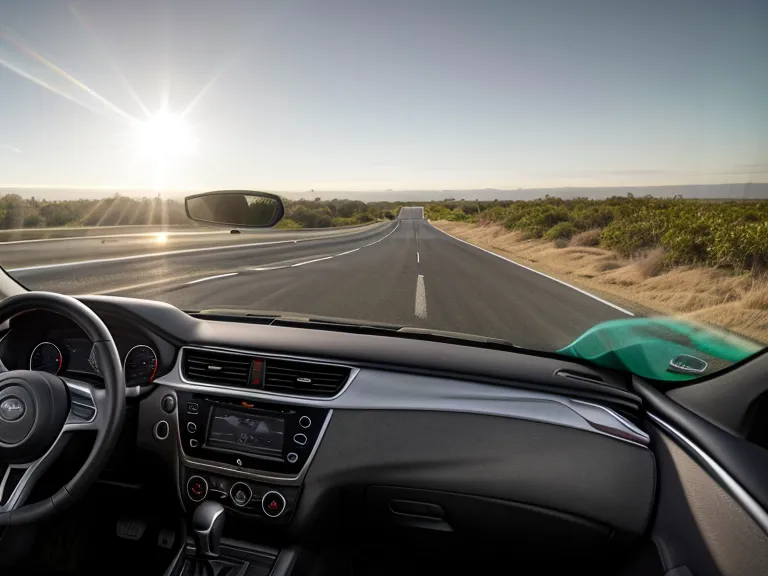
Driving on Interstate 4 is already a lesson in patience before you factor in a temperamental bladder. The old version of this trip had a rhythm: a stop at the Plant City exit, another in Lakeland, one more in Davenport once things got urgent, and a last one near the Disney-area exits, where traffic at the 528 interchange always seemed to show up at the worst possible moment. Call it a stop every twenty-some miles, not a road trip so much as a series of forced errands with a car in between them.
Before landing on the comparison I'm describing here, I'd tried a handful of things, including a stinging nettle root experiment that satisfied my curiosity more than it solved anything. The same shift eventually showed up outside the car too. At ZooTampa at Lowry Park, I used to scope out the nearest restroom before we'd even bought tickets; these days I walk in without thinking about it.
Was It Really the Cardio, or Something Else?
More activity was the obvious first fix. A couple of extra walks, a weekend swim here and there, on the theory that a more active body would just handle bladder pressure on its own. It helped — my sleep got noticeably deeper, and I wasn't lying there running the math on when the next urge would hit. What it didn't touch was the actual trip count. The nights got quieter; how often I got up barely budged.
The clearest sign that something else was going on came during a Rays game — I was still on the couch when the broadcast rolled credits, no trip to the bathroom the entire time, which hadn't happened once during the cardio-only stretch. That's close to the premise behind bladder training — building holding capacity under real conditions instead of on a schedule you control. The road trip turned into an unplanned stress test of exactly that idea, just not one I'd signed up for or could reschedule if it went badly.
Dennis, my neighbor and a retired firefighter, gets a version of this update whenever it comes up. He couldn't care less about the spreadsheet — his eyes glaze over the second a screenshot appears — but even he's been consistent that the change is noticeable without any numbers attached to it.
The Supplement Comparison Came Down to Two Bottles
Once the cardio experiment made it clear that sleep and trip count were two separate problems, I turned to Protoflow, since the ingredient list stuck to saw palmetto and plant sterols instead of hiding behind a vague "proprietary blend." There's a faint plasticky whiff every time a new bottle's seal cracks for the first time — same smell, every bottle, oddly reassuring at this point. I'd chased a few other explanations before that — including whether drinking beer in the Tampa heat was quietly making things worse — but nothing lined up as cleanly as what changed once this became the daily habit. I'd also run a side-by-side Protoflow vs FlowForce Max comparison earlier, mostly to rule out a better-fitting option.
This part of the comparison isn't a full supplement review of everything in my cabinet — it's a two-bottle bake-off between what I use now and the one alternative that comes up most in reader questions. For anyone who can't stand swallowing capsules, ProstaVive is the liquid version — a dropper into coffee or water, no pill involved, and plenty of guys prefer it for exactly that reason. I ran it for a stretch myself, and it does the job if capsules aren't your thing, though the taste takes some getting used to. For my own routine, the capsule format of Protoflow fit better — coffee, spreadsheet, pills, same order every morning. Really, that's the whole delivery-format question in a nutshell: it's less about which ingredient wins on paper and more about which format you'll actually keep using.
So Which Approach Actually Holds Up on I-4?
Here's the comparison stripped down to what matters: if the only problem is restless nights, cardio alone might be enough on its own — mine got quieter before anything else did. If the problem is specifically your range on a long stretch of road, more walking and swimming did nothing for that number, at least in my case. Those are two different metrics, and conflating them is exactly the kind of error I'd flag in a status report at work — measuring one thing and reporting it as though it answers a completely different question.
A reader named Brent Sorensen emailed me a rundown of his own tracking, and what actually stuck with me wasn't which product he landed on — it was how many questions he asked about how I was categorizing "urgency" in the first place. That's the part people tend to skip: deciding what you're actually measuring before deciding whether something worked.
For the drive itself, the comparison held. We passed Plant City, then Lakeland, then the Champions Gate stretch where I'd normally start scanning for an exit, and never stopped once. If you're tired of planning road trips around the nearest restroom, something like Protoflow is worth a look — talk to your own doctor first, since none of this replaces an actual diagnosis. You can check out Protoflow for yourself here, and see whether the same comparison holds up on your own drive.