
My alarm goes off at its usual volume, and for the first time since 2022, it beats my bladder to the punch — I'm up because of the phone buzzing on the nightstand, not the usual overnight signal. That's the kind of detail that only shows up once you're deep into supplement tracking, and prostate health is exactly the kind of subject most guys ignore until sleep quality has been wrecked for years running. Everything below comes from personal experience and a stubborn spreadsheet, not a lab coat.
Quick disclosure while we're still near the top: some of the products named further down are ones I earn a commission on if you buy through my link, at no extra cost to you. That doesn't change what actually got logged — the numbers in the spreadsheet don't care who's paying for the click.
The One Number Worth Knowing About Prostate Health
Here's the number that reframed how I read my own logs: BPH — the clinical shorthand for an enlarged prostate — affects roughly half of men once they hit their fifties, and it only gets more common with each decade after that. It isn't a rare malfunction or a sign that something's uniquely wrong with your plumbing specifically; it's closer to a near-universal feature of getting older, and the guys who never notice anything are the exception, not the rule. Part of why it shows up more often generation over generation probably has to do with the same broader metabolic trends showing up more across the board these days — nothing exotic, just more common than the marketing for any one supplement wants you to think.
Somewhere in my own log — not a page anyone else needs to see, just the accumulated rows on the spreadsheet — there are more nights marked with two or three wake-ups than nights with zero. That's not a complaint so much as a decimal point: it plots me right in the middle of a very ordinary demographic, which was oddly reassuring once I stopped treating it like a personal failure specific to me.
What Does My Desk Actually Look Like at 2 AM?
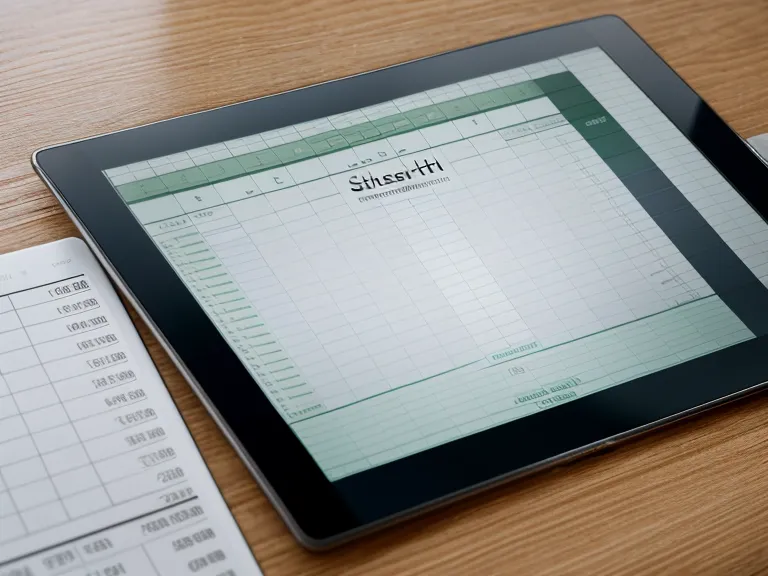
Two monitors, an L-shaped desk, and a chair that sits maybe twelve feet from the hallway bathroom — that's the actual hardware behind this whole operation. The left screen still runs whatever leftover work ticket I'm poking at; the right one stays permanently open to the tracking sheet, a habit that started as a single data point and slowly turned into a personality trait. A shelf behind the chair holds whatever bottles are mid-trial at the moment, each one labeled with a start date, and a whiteboard on the wall keeps a running tally of start and stop dates in whatever color marker was within reach — red for stopped, green for still going.
The giveaway that this has gotten a little out of hand is how often the glow from that right-hand monitor is the only light in an otherwise dark room well past midnight, spreadsheet tab still open from the night before because closing it never seems worth the effort.
Gary Poletti, a former coworker from the IT days who's fully retired now and clearly has more free time than he knows what to do with, likes to poke holes in my methodology from his recliner. He'll cross-reference whatever I just logged against the consumer review threads he reads compulsively, then text me a screenshot captioned with something like "this guy says his did nothing after two bottles," as if that settles anything on its own. It doesn't, but it's a decent gut check against falling for my own confirmation bias.
Hector Mancini, a forum regular down in South Florida, does something similar from the other direction — he keeps his own informal symptom log and periodically emails me a screenshot comparing his numbers to mine, unprompted, like we're maintaining rival dashboards for the same outage. It's oddly validating watching someone else's data drift in the same direction as mine whenever a supplement actually does something.
The spreadsheet itself — what actually goes in each column, and how to baseline a "normal" night before testing anything new — is a big enough subject that it earned its own separate write-up rather than a tangent here.

Four Experiments That Went Nowhere
Not everything I've tried made it into the win column, and four of these are worth spelling out because they're the ones I see other guys repeat.
One early formula — not one I'd recommend and not one I'll bother naming — had me doubled over with stomach cramps by the second morning. Nothing dangerous, just miserable enough that I quit the bottle and wrote myself a permanent note: never start a new supplement on a day I actually need to function.
Another stretch, I just stopped logging altogether — no travel excuse, no crisis, I simply got lazy about opening the sheet for several days running. When I picked it back up, I couldn't tell you whether the calmer nights in between were the supplement working or pure coincidence, because the one column that would have answered that — what time, what dose — was sitting empty. An untracked stretch, it turns out, is functionally the same as a stretch that never happened at all.
Cutting caffeine entirely, cold turkey, was the third attempt — three weeks straight, on the theory that it was irritating things overnight more than I realized. Mornings turned brutal, I was useless before noon, and the nighttime trips kept right on happening regardless, proving nothing except that I could tolerate being miserable for no measurable benefit. My coffee habit came back shortly after and hasn't left since.
Doubling my evening water intake instead of cutting it off earlier was idea four, and it backfired about as predictably as you'd expect once I actually thought it through. Instead of fewer wake-ups, the log showed more of them than my usual baseline — a reminder that "drink more water, always" is the kind of blanket advice that doesn't survive contact with an actual spreadsheet.
Wasting weeks on a formula that never does anything is a lot like paying for a subscription you keep meaning to cancel — quietly draining, never dramatic enough to notice right away. Exactly when to cut off water before bed is its own calculation, with enough nuance that it got a dedicated write-up instead of a squeeze-in here.
Judging a New Supplement Before the Bottle Ships
Seven years and something like a dozen different bottles later, a short checklist decides whether anything new even earns a slot on that shelf, and none of it has to do with marketing copy. Sticking with a product that clearly isn't working is a lot like refusing to replace a leaky faucet because of the wrench you already bought — the sunk time doesn't fix the leak, it just delays the fix.
Diet-based approaches got tested too. I spent a stretch on Pumpkin Seed Oil for Prostate Health and Urinary Frequency Results, which nudged things slightly but was never going to be the whole fix on its own.
The formula that's earned the longest continuous run on that shelf is Protoflow — not because of a flashy ad, but because the label actually states what's in it, and a real refund window meant testing it carried basically no risk if it flopped.
Whether saw palmetto or beta-sitosterol deserves more of the credit when a formula works is a debate I've tracked in more depth elsewhere. How Protoflow's specific ingredient list stacks up against other formulas on that same shelf is its own comparison, and I won't rehash it here.
Pill fatigue set in eventually — swallowing a fistful of capsules every morning between the multivitamin and everything else gets old — so I tested ProstaVive as a liquid alternative to see whether faster absorption was a real feature or just marketing language. The taste is genuinely rough straight from the dropper (mixing it into a small glass of tart cherry juice fixes that completely), and the format seemed to kick in a touch sooner than capsules did, though the two landed in roughly the same place over the longer stretch.

For guys who can't stand capsules or liquid either one, there's a chewable option I compared directly against the classic capsule format in Protoflow vs FlowForce Max.
Nutrient timing outside the main supplement mattered too, and the specifics live in Best Vitamins for Prostate Health and Reducing Nightly Bathroom Trips, which rounds out what's on that shelf besides the two main bottles.
Format alone — liquid versus capsule versus the dropper style some brands use — turned out to matter enough on its own that it got a dedicated comparison rather than a paragraph folded in here.
Where Protoflow and ProstaVive Fit Into the Routine
These days the rotation is straightforward: Protoflow stays the default for the label transparency and the consistency, and ProstaVive comes back into the mix whenever pill fatigue creeps in again and a liquid format sounds less unpleasant than another handful of capsules.
Supplements are only one lever, and not the only one that gets logged. Bladder training drills are a separate practice with their own entries kept elsewhere rather than mixed into this one. Pelvic floor work gets tracked on its own tab too, since progress there moves on a completely different clock than anything a bottle can influence. And if the connection between sleep and a prostate issue isn't even obvious to you yet, there's a fuller rundown of the signs worth checking before assuming that's the actual cause.
The Trade-Off That Actually Matters Here
None of this requires turning into someone who charts humidity for fun (my wife's phrase, not mine, and she's not wrong that I've gone further than most people would bother). It just requires treating three or more nightly wake-ups as a data point instead of a life sentence, checking the actual label before buying anything, and giving whatever you try a full month before deciding it failed. Protoflow is where that process has landed for me so far, but the process matters more than the specific bottle — the spreadsheet doesn't care which brand wins, only whether the numbers move.