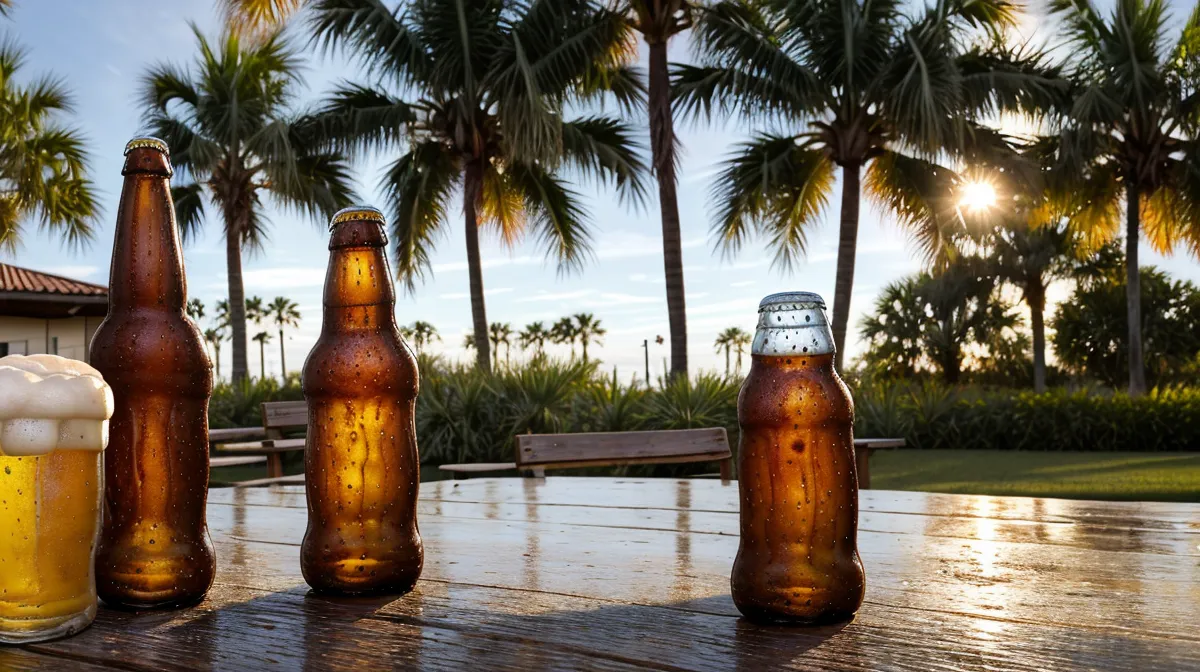
Halfway through a cold beer on the patio, sweat already soaking through my shirt in the kind of humidity Tampa specializes in, I can predict tonight's bathroom count with the kind of accuracy I used to reserve for server uptime reports. That's not a normal thing to know about your own prostate, but here we are.
Quick disclosure before the beer talk: some of the links below are affiliate links — I earn a small commission if you buy through them, at no extra cost to you. I'm not a doctor or a urologist, just a semi-retired IT guy who got tired of mapping bathrooms during ballgames and date nights. My wife calls the spreadsheet overkill. She's probably right. Check with an actual professional before changing anything about your own routine.
Tampa Heat Turns Hydration Into a Balancing Act
Tampa's summer highs sit around 90°F with humidity thick enough to chew, and for the guys re-roofing houses in my neighborhood, hydration isn't optional — it's survival. For the rest of us managing something less visible, an aging prostate that doesn't love being pushed hard in either direction, hydration turns into a balancing act instead of a simple rule.
A slow afternoon walking around ZooTampa at Lowry Park is actually where the timing question clicked for me — not through some dramatic bathroom emergency, just by noticing how differently my body handled water sipped steadily over three hours versus water gulped down all at once in the parking lot before we'd even bought tickets. Volume alone was never the whole variable. It's how the body processes that volume once the heat is already working against it.
Beer just complicates an already messy hydration-timing equation. It's less about drinking too much and more about a dehydration-rebound effect — the kind of thing that just moves the problem to 3 AM instead of eliminating it in the moment.
Does the Beer Actually Make Things Worse?
Short answer: yes, and I won't pretend to be a biologist about why. Alcohol works as a diuretic, and yes, that's tangled up with something called vasopressin, though I'll leave the hormone lecture to people with actual medical degrees. What I can tell you is what shows up on my end: two beers in Florida heat, and there's a heavy, dull pressure low in the abdomen well before the evening is supposed to be over.
The only upside of being awake at odd hours is company, occasionally. Gary Poletti, a former coworker of mine, texts at times that make me question whether he actually retired — links to random news stories, half-formed jokes, once a photo of his sprinkler system at close to four in the morning. At least somebody's around to reply to.
Swapping Beer for Chamomile Tea Didn't Move the Needle
I tried swapping the evening beer for chamomile tea instead, on the theory that removing the diuretic outright would fix the timing problem. It made zero measurable difference on the spreadsheet — same average trip count, same 3 AM wakeups, just a different taste in my mouth before bed. That one stung a little, because it felt like the obvious fix.
Chamomile wasn't the only rabbit hole. I've poked at bladder training exercises, tried the pelvic floor routines that show up in every men's health forum eventually, and spent an embarrassing number of hours comparing saw palmetto against beta-sitosterol on paper before ever swallowing a capsule of either. None of that is a secret formula. It's just the kind of methodical poking around that fills a spreadsheet when your only real qualification is being annoyed at 3 AM.
Eight Weeks, One Rays Game, and a Quiet Night
Eight weeks into a steadier supplement routine is when the pattern actually shifted, not because of one big moment but because the good nights slowly started outnumbering the bad ones. Somewhere around that point I sat down to watch a Rays game with a beer in hand, and the next thing I knew it was the credits of whatever came on after — no trip to the bathroom in between, no mental math about the ninth inning versus my bladder.
That's the kind of data point that goes on the spreadsheet without much ceremony, one column, one checkmark, moving on. A reader named Hector Mancini, down in South Florida, checks in with me roughly every six weeks with a one-line update on his own numbers. Neither of us treats it like a breakthrough. It's just a running tally of whether the baseline is holding.
Sleep is really the whole ballgame here — the bathroom trips are just the symptom you can count. I've written elsewhere about the quieter signs a restless prostate throws at you before the 3 AM trips even start, and if any of that sounds familiar, it's worth paying attention to long before beer ever enters the picture.
Where Protoflow Actually Fits Into the Routine
Zinc was an earlier experiment, back before I'd landed on anything else. I looked into how much zinc a man should take daily, and it helped the baseline numbers a little, but it never touched the specific spike that beer and heat create together.
I settled on Protoflow as the one I stuck with, mostly because the ingredient list stays honest about what's actually in the capsule — saw palmetto and the plant sterols, nothing dressed up with a dozen add-ins I can't pronounce. The 60-day guarantee mattered too, because a guy who tracks everything in a spreadsheet isn't going to gamble on something he can't return if the numbers don't move.
For comparison, I've also run ProstaVive through the same tracking — it's a liquid formula, and some guys prefer mixing it into juice over swallowing a capsule entirely. I laid out the full week-by-week breakdown in my ProstaVive vs Prostadine results post, if you want the granular version instead of the summary. How the two ingredient stacks actually compare against each other is its own rabbit hole I've mapped out on the site separately, so I won't rehash it here.
Final Notes From the Spreadsheet
None of this makes me interesting at parties, but the IT brain doesn't turn off just because I'm retired-ish. Sleeping through more nights has done more for my IT productivity during the day than any single supplement did on its own — turns out uninterrupted sleep is a bigger lever than I gave it credit for.
If you're in a climate like Tampa's and tired of doing the 3 AM math, the lesson I'd pass along isn't about any one product — it's that timing beats willpower. Watch the pre-beer hydration instead of cutting it out entirely, keep the beer earlier in the evening if you're having one at all, and give a natural supplement like Protoflow more than a week or two before deciding it isn't working, because the data on my end didn't move fast either. I still have a cold one on the patio most weekends. I just plan the evening around the data now instead of guessing.