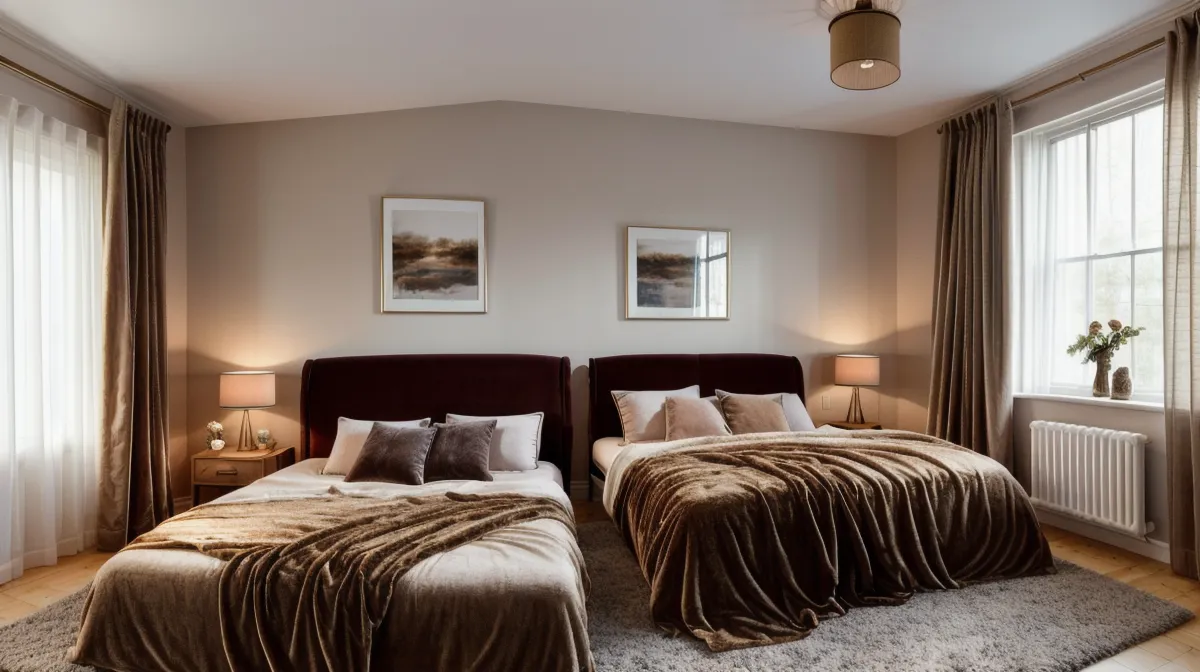
The switch for my hallway bathroom light has a dimmer wired into it now instead of a plain on/off toggle. That small change says a lot about how much sleep hygiene starts to matter once prostate health becomes something you track instead of ignore. Nocturia — the clinical name for waking to urinate more than once a night — isn't purely a prostate problem; it's an environment problem, and most of what actually helps in this corner of men's wellness has nothing to do with the prostate itself. An enlarged prostate changes how the whole system behaves after midnight, and I've broken down the specific signs of that pattern in a separate piece, but this one covers everything around it — the room, the routine, the walk to the bathroom and back.
What Sleep Hygiene Actually Means When Nocturia Is the Problem
Sleep hygiene gets treated like a throwaway phrase, usually attached to advice about screen time or not eating pizza at midnight. For a guy getting up once or twice a night for reasons that have nothing to do with willpower, it means something narrower: the set of environmental variables that decide whether you fall back asleep in ten minutes or lie there for an hour doing math about how tired tomorrow's client call is going to make you. None of it replaces whatever you're doing to manage the prostate side of things directly. It just decides how much that side of things actually costs you in lost sleep.
Auditing Temperature and Light First
My home office runs on roughly the same logic as my bedroom does now. The whiteboard on the wall already carries start and stop dates for whatever I'm testing that month, marked in red when something stops and green when something starts, so folding a couple of sleep variables into that same system was just extending a habit, not building something new. Temperature came first. Most sleep advice lands somewhere around 65 degrees Fahrenheit, and I'd been running the thermostat closer to 72 out of a stubborn dislike of the cold. Dropping it down measurably shortened how long it took to fall back asleep after a bathroom trip, at least according to the tracker my wife rolls her eyes at every time she walks past my desk. Light came next. Heavy blackout curtains went up, and I stopped treating blue light from screens and streetlamps as background noise — even a thin line of light under the door seems to be enough to convince your brain it's later than it actually is, or earlier, depending which direction you're headed when you cross the hallway.
Testing the Two-Hour Fluid Cutoff
Every generic guide says stop drinking two hours before bed, full stop. That's the standard advice, and it's not wrong exactly, but I found it incomplete. Cutting off water entirely by early evening left me just as awake, only thirstier, which isn't the trade you want. What worked better was sipping small amounts until roughly ninety minutes before bed instead of slamming a hard stop on the clock — a pattern that tracks closer to actual nocturia management than a rule copied off a pamphlet. I went far enough down that rabbit hole to test whether alkaline water is better for men with frequent nighttime urination, and the honest result was: not enough difference to matter next to just watching timing and volume.
Cutting the Friction Out of the Actual Trip
If a trip to the bathroom is happening regardless — and at 57, the odds favor it happening — the goal shifts to making that trip as low-impact as possible. Flipping on an overhead light used to be my default, and it was the single worst habit in the whole routine; a dim, amber-toned nightlight gives enough visibility to dodge the rug without telling your body it's time to start the day. Bare feet on cold bathroom tile were the other offender — that jolt is enough to snap you fully alert right when you're trying to do the opposite. A pair of slippers by the bed fixed that one, and it's a small enough change that I'm slightly embarrassed by how much it mattered.
There's a mental version of this friction too — the phantom urge that shows up the second your head hits the pillow, even though you just went, and it has more to do with anxiety than actual bladder volume. Working through how to practice bladder training during the day turned out to carry over to those middle-of-the-night false alarms better than I expected, which is a strange thing for an IT guy to get enthusiastic about, but here we are.
Approaches That Didn't Move the Needle
Not everything I tried earned its spot in the routine. I spent a stretch assuming general activity was the missing piece and added more cardio, figuring a more tired body would just sleep through the urge. It helped how deep and steady the sleep felt overall — that part genuinely improved — but it did nothing to the actual trip count logged on the spreadsheet, which was the number I was actually chasing. Pelvic floor work is a different lever entirely and deserves its own separate log rather than a mention here, and the same goes for cutting specific evening foods and drinks — worth testing on its own, but a distinct experiment from temperature and light.
Track the Baseline Before You Touch Anything Else
None of these changes mean much without a number to compare them against first, which is really its own topic — I keep a full spreadsheet behind that idea alone, tracking a baseline before touching a single variable. What I drink earlier in the evening turned out to matter as much as when I stop: I swapped my evening wine for herbal tea once I noticed alcohol was doing more damage to the back half of the night than the relaxation up front was worth — something like a process that looks fine in the logs right up until it quietly crashes the server hours later. Comparing specific ingredient combinations, capsule versus liquid formats, or running two supplements head-to-head against each other are all separate logs entirely, along with the question of what to actually trust on a label and whether saw palmetto or beta-sitosterol comes out ahead. None of it matters much if the room is too warm and the lights are too bright to begin with.
The honest takeaway is that sleep hygiene is the floor everything else sits on. You can work through every supplement on the shelf, and I've covered my honest take on prostate supplements in detail elsewhere, but none of it out-competes a bedroom that's too warm, too bright, or full of unnecessary friction on the walk back to bed. Fix the environment first. Everything else gets easier to measure once that variable stops moving around underneath you.